New research finds decentralized electricity markets are prone to underinvestment in resilience to rare events like the severe winter storms that crippled the Texas grid a year ago.
Seven exceptional early-career scholars will be awarded three-year fellowships to pursue independent research in the arts and humanities, social sciences and natural sciences.
Cornell chemists have discovered a class of nonprecious metal derivatives that can catalyze fuel cell reactions about as well as platinum at a fraction of the cost, which could bring hydrogen fuel cells in vehicles and generators closer to reality.
A new Cornell study could help inform the development of offshore wind farms by providing detailed models characterizing the frequency, intensity and height of low-level jet streams over the Atlantic coast.
In the arid world of processing flour and food powders, where using water to sanitize is impossible, Cornell researchers are studying dry, superheated steam.
The challenges of 3D printing in space may be overcome thanks to modeling software that was created at Cornell and successfully tested aboard the international space station on Jan. 1.
Cornell researchers have for the first time imaged the entire depth of the lymph nodes in a living mouse using three-photon microscopy, which enabled them to observe the dynamic interactions of immune cells.
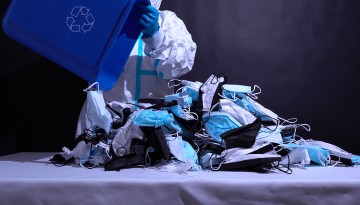
Forget incineration or landfills. To resolve the increasing, never-ending waste stream of medical PPE as a result of the pandemic, Cornell engineers suggest recycling via pyrolysis.