Research done at Cornell has uncovered the first potential signs of spin-orbit resonances in binary black holes, a step toward understanding the mechanisms of supernovas and other big questions in astrophysics.
Cornell researchers have found a way to train physical systems, ranging from computer speakers and lasers to simple electronic circuits, to perform machine-learning computations, such as identifying handwritten numbers and spoken vowel sounds.
Seven Cornell faculty members have been elected fellows of the American Association for the Advancement of Science, the world’s largest general scientific society. This year's fellows, 564 in all, will be honored at a virtual event Feb. 19.
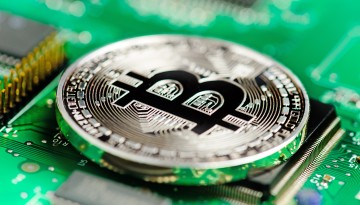
Blockchain technology expert Ari Juels testified Jan. 20 before a Congressional subcommittee that digital currency – a notorious energy guzzler – can be validated in greener ways.
A team led by Natasha Holmes, the Ann S. Bowers Assistant Professor, set out to interview and survey physics undergraduates to see what role their preferences play in the well-documented gender disparities in physics lab courses.
Cornell startups Ava Labs have new key partnerships with Deloitte and Mastercard, while university startup companies SwiftScale Biologics and Novomer have been acquired.
For the Northeastern U.S., the year 2021 was third warmest – at an average of 49.5 degrees, which ties the year 2020 – since 1895, says the Northeast Regional Climate Center.
The Cornell Space Systems Design Studio is preparing to launch a pair of low-cost, modular satellites into low Earth orbit, where they will drift apart by up to 30 kilometers and then, using custom software, locate each other’s position, fire their thrusters and dock together.