'Wicked' plants can kill, warns best-selling author
By Kate Neafsey Engler
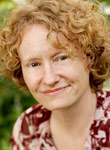
What do monkshood, oleander, tobacco and corn have in common? They are all "wicked," said author Amy Stewart speaking to a full house in Statler Auditorium Sept. 29.
Stewart is the author of The New York Times best-seller "Wicked Plants: The Weed That Killed Lincoln's Mother and Other Botanical Atrocities," which won a 2010 American Horticultural Society Book Award.
Stewart delivered the annual Audrey Harkness O'Connor Lecture, part of the Cornell Plantations' 2010 Fall Lecture Series. In her lecture, "Wicked Plants -- The Deliciously Dark Side of the Plant Kingdom," Stewart highlighted some stories from her book, which focuses on treacherous flora, especially those that played a role in the death of a famous figure or in a major event.
Take white snakeroot: When eaten by grazing cows, its toxin gets into their milk and can poison humans who drink it. As the title of Stewart's book suggests, Abraham Lincoln's mother succumbed to "milk sickness" by drinking tainted milk when Lincoln was 9 years old.
CU's W.C. Muenscher Poisonous Plant Garden
When researching poisonous plants for her book, Amy Stewart first turned to Cornell's College of Veterinary Medicine. She was guided to the W.C. Muenscher Poisonous Plant Garden, located behind James Law Auditorium. The garden, with nearly 100 plants represented -- most from the northeastern United States -- is part of the Cornell Plantations. It is named for Muenscher, a professor of botany at Cornell from 1923 to 1954, who wrote the classic book "Poisonous Plants of the United States."
Muenscher established the garden to instruct veterinary students on common plants that are poisonous to livestock and companion animals; many are toxic to humans as well, such as white snakeroot, larkspurs, poison ivy, jimsonweed, pokeweed and purple foxglove.
The signs labeling each plant include details about the plants and their effects,and a similar booklet is for sale in the Plantations Gift Shop. While the best time to view the garden is between June and August, several plants are still in bloom, including monkshood, castor bean and pokeweed.
Wicked plants, she said, the ones that are "poisonous, deadly or offensive," surround us in cities, parks and homes. For example, the castor oil plant is commonly used in urban plantings, but its beans contain the deadly toxin ricin. Nightshade is another beautiful plant, but it can cause hallucinations and be fatal if eaten.
In 1961, residents of Santa Cruz, Calif., noticed that many disoriented seagulls were flying into people and buildings. It wasn't until years later that scientists realized that the seagulls had consumed fish that had fed on algae containing a neurotoxin. Purportedly, Stewart said, the event was Alfred Hitchcock's inspiration for his film "The Birds."
Stewart also discussed such influential fungi as ergot, which contains a precursor to the hallucinogen LSD. Ergot, which grows on grain and survives baking and brewing, has been theorized to be the cause of the odd behavior associated with the Salem witch trials of 1692, Stewart said.
Even several common houseplants are poisonous, she said, such as the sago palm, which is toxic to dogs, and the lily, which is toxic to cats. Pet owners and parents of small children, she warned, need to be careful about what plants they keep in and around their homes -- more than 68,000 human poisonings are caused by plants each year, she cited.
Stewart's next book, "Wicked Bugs: A Natural History of the Dark Side of Bugs," is scheduled for publication in May 2011.
Graduate student Kate Neafsey Engler is a writer intern for the Cornell Chronicle.
Media Contact
Get Cornell news delivered right to your inbox.
Subscribe