The Presidential Advisors on Diversity and Equity have awarded three Belonging at Cornell innovation grants for 2022 programming, for projects addressing a range of topics involving diversity, equity and inclusion on all of Cornell’s campuses.
Journalist Tristan Ahtone and historian Robert Lee will talk about how Indigenous land expropriated by the 1862 Morrill Act is the foundation of the land-grant university system in the 2022 Kops Lecture.
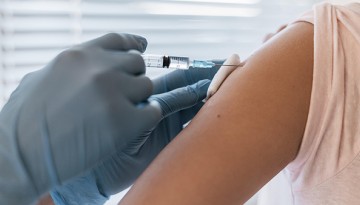
According to new Cornell research, people are more likely to accept the COVID-19 booster the more effective it is, if there are cash incentives and if it is made by Moderna or Pfizer.
New research from Cornell offers insights into a line of CRISPR systems, which could lead to promising antiviral and tissue engineering tools in animals and plants.
Cornell’s Center for Alkaline-Based Energy Solutions has received renewal funding of $12.6 million for a four-year period to continue its work developing advanced fuel cell technologies in alkaline media.
While many scientists say field courses shaped their careers and benefit their students, few studies quantify their effects. Cornell researchers want to change that.
NASA’s James Webb Space Telescope opens a new chapter in scientific history, as an international team – including Cornell astronomers – found carbon dioxide evidence on the exoplanet WASP-39b.