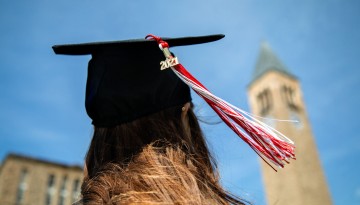
This weekend’s ceremonies for Cornell’s 153rd graduating class will look different due to COVID-19 safety precautions and protocols – but they promise to be as memorable and meaningful as ever.
Featuring color-shifting walls and folded stainless-steel modules, the permanent pavilion designed by Jenny Sabin (AAP) and her practice serves as a new gateway to – and symbol of – the interdisciplinary college.
At the virtual Cornell Investment Ideas Forum on May 1, five student teams vied for $1,000 in prize money as they pitched their investment ideas to a panel of industry experts.
Serving residents of two upstate New York counties, the HOPES program led by Rana Zadeh is providing secure medication organizers and training to help prevent potentially dangerous and costly mishaps.
More than 30 students presented their research on a wide range of topics during the 35th Cornell Undergraduate Research Board Spring Symposium, held virtually May 4-7.
The College of Human Ecology on May 1 held its fourth annual HumEcathon, a hackathon-style design challenge bringing together 27 undergraduates to work in multidisciplinary teams on diversity, equity and inclusion initiatives on campus.
The search for answers to some difficult questions planted the seeds for developmental psychologist Anthony Ong’s latest course, the three-credit “Positive Psychology: Inside Prison (and Out).”
When the U.S. began distributing COVID-19 vaccines this winter, Jordan Tralins ’23 found it odd that her social media feeds didn’t have any factual information about the shots. Tralins decided to do something about it.
Normal blood levels of vitamin D don’t affect one’s susceptibility to getting COVID-19 or the severity of infections, according to new research led by Bonnie Patchen, a doctoral student in the field of nutrition.