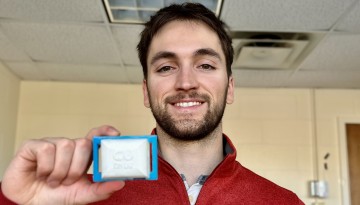
A team led by Dr. Samie Jaffrey, the Greenberg-Starr Professor of Pharmacology at Weill Cornell Medicine, has been awarded a three-year, $1.65 million grant for RNA research under a biotechnology-development program run by the U.S. National Science Foundation.
Members of the Weill Cornell Medical College Class of 2024 learned on national Match Day where they will be doing their internship and residency training – setting the stage for the next several years of their medical careers and lives.
Specialized nursing facility clinicians, or SNFists, may decrease the likelihood of nursing home residents experiencing stressful hospitalizations and improve the quality of life in their last days, according to researchers from Weill Cornell Medicine.
Mistrust of medical science during the pandemic is the rule, not the exception, of public perception of mainstream medicine historically, said Lewis A. Grossman, an American University law professor, in a lecture March 13 at Weill Cornell Medicine.
Researchers at Weill Cornell Medicine have shown that three months of social worker follow-up support to people hospitalized with HIV in Tanzania had health benefits at low cost.
Male breast cancer has distinct alterations in the tumor genome that may suggest potential treatment targets, according to a study by Weill Cornell Medicine investigators.
Patients who have drug-resistant tuberculosis have a similar microbiological response to bedaquiline-based second-line medications as patients with drug-sensitive TB taking first-line regimens, according to researchers at Weill Cornell Medicine.