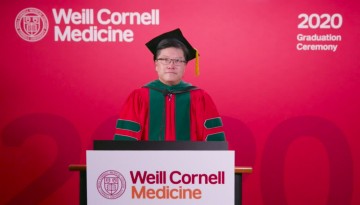
The prospect of residency typically brings jitters to newly minted doctors, but the transition has become far more complex with numerous unknowns surrounding the ongoing COVID-19 pandemic.
The Office of the Vice Provost for Research has announced a new seed grant mechanism to fund preliminary investigations into medical and biological aspects of SARS-CoV-2, the virus that causes COVID-19.
Cornell thought leaders discussed the balance between public health and economic health, and the role government plays in finding a path forward during COVID-19 in a webinar April 30.
A determined group of Cornellians in and with connections to China has been helping to provide crucial equipment and supplies for medical professionals at Weill Cornell Medicine in New York City and Cayuga Medical Center in Ithaca.
Collaborating across disparate disciplines to tackle the grand challenges facing humanity is intrinsic to Cornell’s unique brand of research innovation.
In the 1800s, Americans were targeted with advertisements for what were often considered “cure-all” medicines, presented in colorful trade cards – now part of a Weill Cornell Medicine collection.
A team of doctors from the College of Veterinary Medicine and Weill Cornell Medicine performed rare canine open-heart surgery to save Lucy, a 7-year-old yellow Labrador retriever.
Karl Pillemer, an expert on older adults, predicts older people will increasingly stay in their own homes, rather than in nursing homes, as a result of the COVID-19 pandemic.